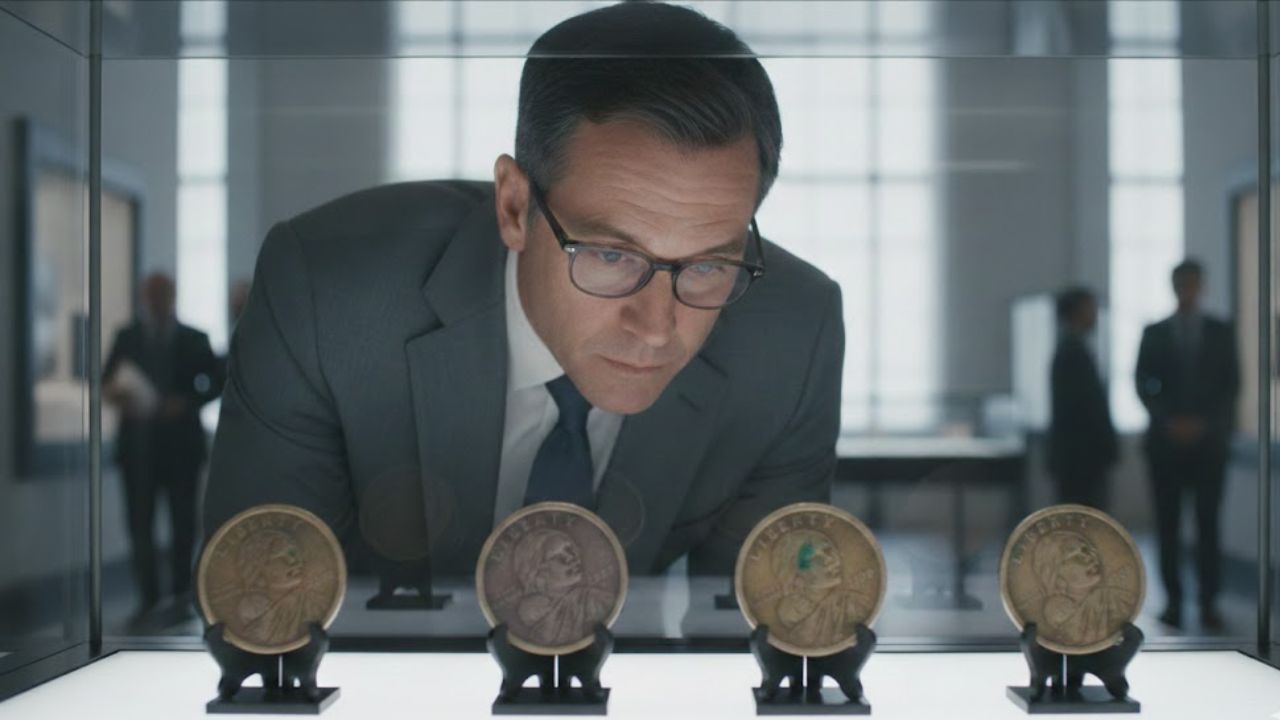
These 7 Overlooked Coins: Most individuals view daily pocket change as trivial metal disks, yet the 2026 collector market reveals that several common-looking coins are actually high-value assets. From legendary wheat pennies to modern minting mishaps, the potential for discovering a life-changing rarity remains a primary driver for hobbyists and investors alike.
2026 Rare Coin Identification & Market Value Index
The values below reflect the 2026 market demand for verified errors and key date specimens.
| Coin Variety | Defining Rare Characteristic | Circulated Value | Mint State (MS) Value |
| 1943 Copper Penny | Non-magnetic; copper-red color | $100,000+ | $1,750,000+ |
| 1909-S VDB Penny | “VDB” initials on reverse base | $800 – $1,300 | $15,000 – $1.7M |
| 1969-S Doubled Die | Strong doubling on date/lettering | $30,000+ | $75,000 – $125,000 |
| 1992 Close AM | “A” and “M” in AMERICA touching | $500 – $1,500 | $22,000 – $50,000+ |
| 1955 Doubled Die | Obvious doubling on all obverse text | $1,200 – $2,500 | $25,000 – $120,000 |
| 2000-P Cheerios Dollar | Enhanced detail in eagle tail feathers | $5,000+ | $25,000 – $35,000 |
| 1982-D Small Date | Copper composition (3.11 grams) | $2,000+ | $15,000+ |
Factors That Create Incredible Numismatic Value
While billions of coins enter circulation annually, specific variables determine whether a coin is worth one cent or one million dollars. The primary catalyst for value is mintage rarity, such as the 1909-S VDB, where production was halted early due to design controversy. Furthermore, minting errors—instances where the machinery failed or used the wrong materials—create unique artifacts like the 1943 copper penny, which was accidentally struck on leftover bronze blanks instead of steel.

Condition remains the ultimate multiplier for price. In 2026, a coin graded MS67 (Mint State) can be worth fifty times more than the same coin in MS63. High-grade specimens retain their original luster and exhibit no signs of wear, making them exceptionally scarce survivors from decades of circulation.
Identifying Modern Rarities and Error Varieties
Detecting these treasures requires a magnifying loupe and a keen eye for detail. For the 1992 Close AM penny, one must examine the distance between the letters A and M in the word “AMERICA” on the reverse. If they are nearly touching, it indicates a rare transitional error. Similarly, the 1969-S doubled die is famous for its dramatic, overlapping appearance on the date and the word “LIBERTY,” which is visible even to the naked eye.
Beyond pennies, collectors hunt for “Mule” errors—coins struck with the front of one denomination and the back of another—and special finishes like the 1964 Special Strike nickels. These coins often appear in inherited collections or “unsearched” bank rolls, where their true identity has remained hidden for years.

Investment Potential of Rare American Currency
Rare coins have solidified their status as alternative investments in 2026, often outpacing traditional stocks during periods of economic volatility. Because the supply of these historical artifacts is fixed, increasing demand from a global collector base drives prices upward. Coins containing precious metals, such as 90% silver quarters and dimes minted before 1965, provide an additional layer of intrinsic “melt” value, though their collector premium usually far exceeds the price of the metal itself.
Final Verdict
The 2026 market proves that searching through your change is more than a hobby; it is a legitimate hunt for hidden wealth. Whether it is a 1955 doubled die or a 2000-P Sacagawea dollar from a cereal box, these coins represent tangible pieces of American history that carry extraordinary financial weight. Before spending that old penny or nickel, take a moment to inspect its date, mint mark, and any potential doubling—it might just be the best investment you ever make.
Disclaimer
This information is for educational purposes and reflects 2026 market trends. The vast majority of coins in circulation are worth only face value. Realized auction prices depend heavily on professional grading (PCGS/NGC), current demand, and authentication. Always seek a professional appraisal before attempting to sell high-value coins.